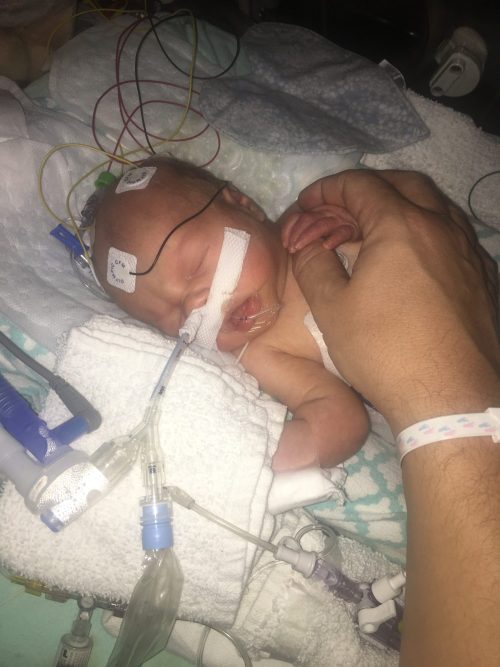
Paediatric brain injuries occur because a baby or child’s brain is starved of oxygen. This can happen before birth, during birth, or as a result of an injury or accident after birth. Because infants’ brains have not yet developed, their outcomes are often quite poor. The first line of defence in reducing the number of brain-injured children in Canada is education. When a brain injury is about to occur, time is almost always of the essence. When parents don’t know anything about warning signs, they may delay medical interventions that could make the difference between life and death or between recovery or severe disability. Why is there no national strategy to educate parents about risk factors and concerning symptoms? This seems like such an obvious way to prevent a lot of unnecessary suffering and cost to our health system.
In Samuel’s case, we might very well have gotten to the hospital sooner than we did, but we had no idea something could be so wrong. But we did get to the hospital in time. So what happened? Management, presumably under pressure from a hospital board made up of mostly non-medical people, decided to cut corners. When we arrived, it was immediately obvious that Samuel was already in distress. An emergency C-Section was needed, but Niagara’s large General Hospital had no anesthesiologist. By the time one could get dressed, drive to the hospital, gown up and prep for surgery, Samuel’s heart had stopped. Had an anesthesiologist been available 30 minutes earlier, it’s possible Samuel’s brain would have been spared or only suffered a mild insult. Someone’s decision to save a few hundred dollars was like a nuclear bomb to our family, and yet there is NO mechanism to make sure that this never happens again to another child. It almost certainly has.
 Hope for Kids Like Samuel